Showing posts with label health. Show all posts

Thursday, June 20, 2013

Death and Taxes

There are two things that are certain about Japan. Taxes in particular can be the death of anyone.

Ok, it is not so cool. I am not sure about how much I would have to pay in America, but here I certainly have to pay an arm and a leg for not even being full time employed. I mean, yes, I make more than just about every other girl my age here. Actually I probably average about probably all women in Japan. This would be because they are domesticated house gnomes that waddle about dressing like a cheap night and pushing around their kids. But we aren't talking about them. We are talking about taxes. Statistics show they they can pull in an astounding 1,900,000 yen a year. It looks like a lot, but really it is about 19,000 dollars. That is about average. Men tend to make more. Still a very male dominated society.
So anyways, after my first 'year' in Japan, I actually got paid back for my taxes. This is when you remember that that 'year' consisted of the months August to December for that tax period. And I got paid back very little. Perhaps 3000 yen and change. A nice dinner. Really nice.
This last year, I worked nearly every one of those months, or at least 175 days worth of the year, and I got rewarded for my services with a very nice heavy tax. The funny thing? My taxes pay me. HAH!
Whats more, is that heavy tax right there? We, the gaijins of Japan, actually pay less (albeit not by much) than the citizens. And many of the citizens are kind of furious about it. They want us to be paying the same amount as them. And to enrage them further, there are many gaijins that don't pay. And continue to live here. Perhaps tax evasion is not as big of an issue here in Japan, and people just don't get arrested or deported for it or whatever, but a large amount of self proclaimed people (not working for anyone I am affiliated with) that they just don't pay taxes with no repercussion. Perhaps they have never tried to leave the country and have a fake address registered though...

And for anyone wondering what you should do if you are still an American citizen and living in Japan and what exactly you need to be doing about taxes, you want to be filling out

  • 255EZ
  • 1044EZ

The 2555EZ form. It essentially is a tax exemption form that you can only fill out that if you made less than 95,000 US dollars outside of the US. And if you are making that much, you need to be getting me a job! You would also fill out the 1044EZ form.  This form pretty much states that you made no income in America for that calendar year.
This process prevents you from being double taxed in both American and Japan.

In addition to the awesome tax money that I have to pay, which is over a thousand dollars, or 100,000yen, your health insurance will also go up.
Your health insurance is at a minumum in the first place because it is based off of what you made the previous years. So my first year, it was about 1,500 because the previous year I was unemployed in Japan. My second year was about the same because I had only worked 3-4 months the previous year in Japan; thus the income for that year was so low, it was considered unemployed. This year however, I worked a full year the previous year and have the taxes to prove it, thus my health insurance skyrocketed. I am now to pay somewhere between 20,000 and 30,000 yen, or 200-300 dollars every month. And this is still considered the kokumin hoken that I wrote about previously. If you have the shakai hoken (shakai meaning society so basically declaring yourself a working member of society), you will pay a lot more. But if you have the shakai hoken, then your company must pay for half. So if your total there was 80,000 yen, you company would pay 40,000yen and you the other half. You can see how the kokumin hoken is still cheaper. Also since I am not considered a full time employee, I would not be eligible for the shakai hoken. 
So pretty much at once, within the same week, you will get hit with a nice heavy tax and a much larger health insurance bill. My total is probably over 300,000 yen. Being an adult sucks

Tuesday, July 3, 2012

Onsen: A guide to the Japanese Hot Springs

In Japan hot springs are referred to as onsens and are extremely different from the jimjilbangs I once wrote about in Korea.
Onsens are naturally occurring springs of boiling water throughout Japan. And what better to do in these naturally occurring hot pockets but bathe!

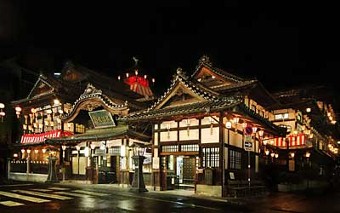
I always found onsens intriguing ever since I saw Spirited Away, the Miyazaki film set at an onsen (which in real life took inspiration from the pictures below, Dogo Onsen, out in Matsueyama - for anyone looking for some travels!)


These hot springs are formed largely from the effect of Japans volcanic activity. Japan has many great features about it, such as there are a surprising number of freshwater rivers and pools throughout the island, as well as fresh water that pools beneath Japan, it has lots of seismic activity dude to the flirtations of those tectonic plates, and of course it is a volcanic island. It is due to this volcanic activity and the underground pools that enable these hot springs to form. That being said, they are not everywhere, but certainly more than I can count in a fair number of places. But seemingly larger cities like Kyoto and Osaka their number seem to dwindle ( I think I only know of one between the two, and it couldn't attest to its magnificence). Rather you had best go to a hot spring town that is known for the onsens. Occasionally, it is even in the name like Kinosaki Onsen.
Personally, I would say I have been to a fair number of onsens, but I would also tell you not enough. But from what I have been to I can tell you these there is a very typical sense to them. Often a few pools and showers of course. And if you are lucky there are also an outdoor set of pools as well. The water temperature typically varies between bath to bath, such that the people who just cannot take the heat, can simply switch to a cooler bath. When I say cooler, in reality I don't believe many baths are ever below 40 Celsius. The baths come in many different styles; some with stone basins or wooden ones, ones where you sit or lie down and let the water run over you, ones with jets to massage you and ones to simple relax in, there are simple foot baths and saunas that use the onsen water for the air vapor. So you know...many. I am a big fan of outdoor baths. Ones where you can feel the wind on your skin to cool you down from the headiness that comes over you are you soak. There is no need to worry about the outdoors part. You are in an enclosed area at all times with walls a few meters high so no peering eyes can find you. Occasionally, the more well done ones will have scenery, a direct and steep mountain side from which the water flows down and into the pool, or even an ocean that is seen through bamboo blinds.
The water of many onsens is especially high in minerals and thought to be good for health and skin. Once at an onsen out in Nagano, the mineral content was just right to tarnish my silver ring in seconds. Where as another out on Iojima island, I swear polished it to a shine such as I have never before seen. Onsens will often boast of their unique mineral content saying how it is good for one thing or another and how you will get less colds and your skin will glow.
Onsens have often been seen as a place to relax and often a place to take a company relaxation trip in Japan. Onsens help to break down the barriers around people (pretty litterally here) and help in communications. It is like a get to know you or a get to know you better, if you will and tends to bring people closer together creating the bonds that companies and clients desire in one another before doing business. Of course it is not just for companies, but perhaps new friends will go together or a mother and her soon to be daughter in law. Or any number of people.
But one cannot just hop into the bath!
First thing is first, you have to get naked. So shuck off those embarrassments and reserves you have about your body and get going. I remember one friend once asking me if you can wear a swim suit, and no, you really can't. There is actually a reason for that. You see, people with tattoos are not allowed inside public baths and onsens. The reason for this? It is because of the yakuza. You see, they cannot outright ban yakuza members from entering, they will just deny being yakuza. So they ban anyone with a tattoo, and as a large number of yakuza have tattoos, they cannot enter. However this method prevents everyone with a tattoo from entering so as to be unbiased and fair. And that ladies and gentlemen, is why you cannot wear swim suits. Though in mixed baths and larger public baths it is entirely acceptable and likely enforced, especially with mixed genders. But those are fairly uncommon. In Korea, I once saw a gal with a swimsuit on and she got a bit of the awkward indirect stare down. I suppose she just felt awkward either being the only one in a swim suit, while old fat wrinkly ajoomas walked around freely or she got the full heat of the silent judging glances. Either way she removed her swim suit in the middle of her shower joining the rest of us in nakedness. And now, with that out of the way...
You have to bathe first! Weird right? You have to bath before getting into a bath. You see, they do not want your body juices floating around the pool and your sweat mucking up everything and getting other people dirty. It will also possibly set the water concentration off a bit. And due to that, and the fact that it is just gross, you take a shower first. There are always showers in every onsen, the vast majority of which also provide shampoo and soap and even 'rinse' if you are lucky (how Japanese call conditioner, but I will swear up and down that it is entirely different from American conditioner). Traditionally, they would fill bowls of water and wash them selves with it and pour water on themselves from it when needed and refilling it as necessary. Now there is generally a shower head and a faucet with bowls so as you can choose whichever you desire. And of course you sit on one of their stools during the process. This is not typically a standing process unless the place is extremely modern. As far as washing goes, you must take note to wash extra thoroughly. No one will be watching you, oh but they will! No one will look at you or pay much attention to you, the whole Japanese eye aversion thing, but they will know for how long you rinsed and how thorough you were. And be certain to wash all of the soap from you body before entering the pools. It is quite uncouth to do otherwise.
You may now enter the pools.
Huzzah! As far as the pools go, you can switch between them as you please, but I wouldn't stay in one too long! These is a lot of dizziness to account for upon standing up, especially from the hotter pools. As far as the length of time for which to stay in each pool, I suppose that is pretty much up to you. I think people will notice if you butterfly about and go from pool to pool minute to minute. This is a relaxing thing. Take your time. And make sure you plan time in your schedule for it to be relaxing. I am not saying don't try each pool, just to enjoy them before you leave them. But by all means if it is not the right fit and you are uncomfortable, no one can hardly blame you for that! I know just recently I went into a 90 Celsius sauna at the hot spring and stayed 3-4 minutes and that was quite enough! It is also important to have some cold water now and again. Sometimes they offer a cold water pool or basin in where you can either dip yourself or splash water on yourself to cool you down; or, most of these places will offer a cold water fountain just outside and disposable cups to drink from.

This is brought on by my recent trip to Nagasaki and my subsequent search for an onsen. I found one. Out at Iojima. And for any curious eyes who want to see it before they try it, I stole a few pictures of inside the onsen. No, no one is in them silly!


The most awesome onsen I went to? There is a mud onsen to the north of Nagano which was extraordinarily awesome. The mud is not thick like you might think, more that the hot spring formed in well and muddied land turning the water a orangey-red and making visibility next to nil beyond a few centimeters.

Thursday, December 15, 2011

医療分 Insuring Japan

いりようぶん

or more simply put, Japanese health insurance.

Insurance is a key thing to have in Japan. Actually, you must have it. By Japanese law, you are required to be insured during your stay here ( exception: this does not include tourists). There are several methods of insurance. 

  • Interglobal
  •  社会保険 Shakai Hoken
  • 国民健康保険 Kokumin Kenko Hoken
  • 私学共済 Shigakou Kyousai
Interglobal is a foreigner special, where I am told that it will only cover you for a year, I believe this limit to be shorter; when I received my information packet and Bronze card, it was only good for three months. Possibly Interglobal is used more often as traveler's health insurance when visiting Japan. It costs 2900 yen and would be deducted from my salary. Since Interac applied for me, my insurance was linked to my salary and gets deducted from my paychecks rather than paying for it in person
.
Nevertheless, that was canceled in all of a day as I received my kokumin kenko hoken. Kokumin hoken is part of the National Health Insurance program. It is for people who are unemployed. I fall into this category, as I was not employed in Japan in the preceding year. This insurance is less than half the price of the Employees Health Insurance. I pay 2000 yen, just over 20 bucks, and it covers 70% of my medical costs. So far I have only used it for going to the dentist. Since I was already in Japan at the time and could easily do it myself, Interac did not take part in the application process. I also pay for it myself via receipt tickets that I have for each month. 
Next year I will have to graduate to Shakai Hoken, as I will have been employed in Japan the previous year. This will cost 8.2% of my salary and it will also cover 70% of my medical costs, as well as other things.
The last type of insurance I mentioned is for private companies and universities. It is similar to Shakai Hoken.
To the left is my Interglobal card and the right is my Kokumin Hoken.
You simply present this card upon entering anywhere
you would need medical or dental attention

How to get insurance:

Interac automatically applied to Interglobal for me since I was not present in Japan to apply for it myself (also just because they are nice guys and want to make your life comfortable and easy). Therefore, they said that even before arrival in Japan I was covered by insurance...I am not certain what this means, since I did not have official documentation for being covered until 2-3 weeks until after I got to Japan. However, Interac assured me that I was covered before I left incase something happens on the plane or at the airport. When it arrived on my doorstep my insurance package contained papers explaining the different programs  (bronze, silver and gold) as well as other necessary readables -- of which I had no intention of doing-- and, most importantly, this little gold card that I would carry around with me to the doctor.

Well I did away with that since it cost more, and seemed to expire in three months anyway, and applied for the Unemployed Persons Insurance, kokumin kenko hoken. To do this you simply go to your respective city office and apply for it in person. Unfortunately, no: Interac cannot apply for this type of insurance for you since it needs to be done with the applicant present. However, there was ridiculously little paperwork involved, so that I thought that they must have misunderstood my purpose. But low and behold, about two weeks later the insurance papers were delivered to my door. These papers included my flimsy but valuable insurance card and a type of receipt ticket with the value and a month stamped on each of them. You simply take the ticket for the appropriate month to any bank or post office to pay for that months insurance in person.
This is one of the insurance tickets that you receive in the mail.
You might be able to see where it says it is for December and how it is due on December 28th of 2011.
It gets stamped upon payment and acts as a receipt thereafter. 
But please note, you cannot go to a city office that is not respective to your living arrangements. They will simply wave you away and keep telling you ' No, no' followed by the appropriate city office.